
|

|
|
Transplant Statistics: Annual Report : Thoracic Organ Transplantation
Data compiled over the past decade for patients on the heart, lung, and heart/lung waiting lists and for those receiving these thoracic organs were analyzed to assess the importance of patient demographics, risk factors, and primary cardiopulmonary disease on trends in waiting list time and mortality. Analysis also sought to identify the characteristics of thoracic transplant recipients and their associated posttransplant outcomes. It is intended that this analysis and review will highlight the evolution of thoracic transplantation in the United States over the past decade and provide insights that may lead to more efficacious allocation of donor organs and improved outcomes. By reviewing data such as these, transplant practices may be identified and prospective studies planned that will form the scientific basis on which to advance thoracic organ allocation policy and the field of thoracic organ transplantation.
The number of registrants on the heart transplant waiting list steadily increased from 2,655 in 1992 to 4,149 in 1998 [Table 11.1]. This represents the high-water mark for the heart transplant waiting list. Unlike all other organs, the size of the heart waiting list has been fairly stable since 1998, and there were 4,096 registrants at the end of 2001. In 2001, 53% of registrants were aged 50 to 64 years, 21% were aged 35 to 49 years, and 12% were aged 65 and older (Figure VIII-1). The greatest change over the past decade was among those over 65 years, who represented 4% of the heart waiting list population in 1992 and 12% in 2001, a 300% increase in proportion. Also of note is the decline of 8% over the decade in the proportion of registrants aged 35-49 years (despite relatively stable absolute numbers on the waiting list), a trend that reflects a more aggressive and inclusive approach to patients over 65 years. The number of patients in the latter group has increased more than fourfold during the past decade.
Among wait-listed registrants, 84% to 86% of registrants were white, 12% to 14% African American, and 0.6% to 1.4% Asian, with smaller percentages classified as other/multi-race or unknown. As for ethnicity, 7% were Hispanic/Latino in 2001. Women represented only 17% of the waiting list population in 1992 and 22% in 2001 [Table 11.1].
Although the media occasionally emphasize that resident aliens are listed, over the past nine years, U.S. residents comprised from 98.9% to 99.5% of all registrants on the heart waiting list, with only 0.1% to 0.5% of non-U.S. residents listed [Table 11.1].
From 1992 to 2001, registrants at year-end had dramatically different profiles with regard to their accrued time on the waiting list (Figure VIII-2). The percentage of registrants waiting one year or less at each year-end decreased almost 50%. The percentage of registrants waiting one to two years was relatively consistent, and those waiting more than two years quadrupled from 11% of the waiting list population to 46% [Table 11.1]. Part of the latter increase may be related to a doubling of the percentage of those designated with a temporarily inactive status, from 23% to 45%. From 1992 to 1998, the percentage of Status 1 patients increased from 6% to 10%, at which point Status 1 patients were subcategorized into 1A and 1B. For the remainder of the decade, Status 1A patients comprised from 2% to 3% of those on the waiting list and Status 1B patients comprised from 8% to 11%.
Over the last three years, Status 1A patients have made up about 20% of the Status 1 category. This fairly high degree of stratification indicates success in separating out the small percentage of patients at highest risk. The percentage of Status 2 patients markedly decreased over the past decade, dropping from 71% to 45%, with a concomitant increase in the percentage who were temporarily inactive, possibly because of improved outcomes with medical therapy.
In 1992, there were 3,965 new registrations on the heart transplant waiting list. This peaked at 4,247 registrants in 1995 and was lowest in 2001 at 3,402. Median time to transplant decreased from 406 days in 1992 to 266 days in 2001 (Figure VIII-3) [Table 11.2].
A considerable amount of fluctuation occurred from year to year in median time to transplant among children.The number of registrants over 65 increased from 140 in 1992 to 246 in 2001. Interestingly, their median time to transplant was well under a year [Table 11.2].
When examining race and ethnicity, the median time to transplant for whites varied from 398 days in 1992 to 268 days in 2001. African Americans had higher median times to transplant, the highest being 654 days in 1993, but this decreased to between 283 and 329 days over the past four years. Asians had a median time to transplant of six months or less, but with a small number of Asian registrants listed, confidence intervals for these medians were very wide. Median time to transplant for the other/multi-race group was quite variable and was 264 days in 2001. For the most part, the Hispanic/Latino registrants had a median time to transplant of six months to one year [Table 11.2].
The median time to transplant for women was consistently shorter than that for men, varying from 174 days in 2001 to 265 days in 1995. For men during that same time, the median time to transplant ranged from 310 days to 319 days [Table 11.2].
Patients with type O blood consistently had the longest median time to transplant, generally two to three years (Figure VIII-4). Those with type A or type B averaged less than one year, and those with type AB averaged two to four months. When median time to transplant for patients having their first transplant is compared with those who had a prior transplant of any organ, waiting time was considerably longer for the re-transplant patients [Table 11.2].
The effect of initial listing status was examined, and it was found that the historic Status 1 patients from 1992 to 1999 had a median time to transplant varying from 70 days to 153 days, with the time in 1999 being 139 days. At that point, Status 1 was split into Status 1A and 1B. The median time to transplant for patients initially listed as Status 1A in 1999 to 2001 varied from 99 days to 144 days, the lowest being in 2000. Patients initially listed as Status 1B had a slightly shorter median time to transplant (93 days in 2001 and 112 days in 2000), though the confidence limits for Status 1A and Status 1B median time to transplant overlapped substantially during this time period. Status 2 patients averaged 18 months to 2 years for their median time to transplant [Table 11.2].
Waiting list annual death rates per 1,000 patient years at risk decreased over the past 10 years. In 1992, the death rate was 317, a figure that decreased to 151 in 2001 [Table 11.3]. The highest death rate by age group was among infants, and this also decreased from 2,591 to 1,373 over the past 10 years. During 2001, patients aged 1 to 5 years had a death rate of 377. Paradoxically, the oldest registrants had the lowest waiting list death rate. Selectivity in the acceptance of patients and the willingness of some programs to accept higher risk donors for this older age patient recipient group may account for the latter finding.
The annual death rate per 1,000 years at risk for the total waiting list population in 2001 was 151 (whites, 148; African Americans, 164; Asians, 148; and other/multi-race, 233). [Table 11.3]. For those of Hispanic/Latino ethnicity, the annual death rate in 2001 was 158 per 1,000 patient years compared with 151 for all patients and 158 for the non-Hispanic/non-Latino group. When analyzing the data for gender differences, the annual death rate per 1,000 patient years at risk for women varied from 168 in 1999 to 376 in 1992. For men it varied from 143 in 2000 to 306 in 1992.
The annual death rate for those on the waiting list with blood type AB ranged from a low of 153 in 2000 to a high of 419 in 1992. Type O patients, who are of some concern to the transplant community because of longer waiting times, actually have a death rate very similar to the group as a whole and to patients with blood types A and B [Table 11.3].
As expected, the highest death rates by status at listing are in the Status 1 and 1A groups. Status 1 patients from 1992 to 1998 had annual death rates of 549 to 867 per 1,000 years, with one outlying year of 1190. After the Status 1A and 1B categories were established, the death rate for Status 1A was 976 in 2001, with a high of 1460 in 1999. Status 1B was somewhat less risky, having about 30% the risk as a Status 1A and ranging from 347 to 565, the latter observed during the transition phase in 1999; Status 2 had about one-tenth the risk of a Status 1A. Over the past five years, Status 2 patients had death rates ranging from 91 in 2001 to a high of 156 in 1997. These observations suggest that the existing medical urgency stratification system is identifying the populations of transplant patients at highest risk but that, conversely, these patients are not being transplanted in a timely fashion.
Kauffman et al. (1) analyzed the determinants of waiting time for heart transplants in the United States and also found that blood type O correlates with the longest waiting time and type AB with the shortest. They also found that Asians had a particularly short waiting time. Hispanics/Latinos were somewhat between Asians and the white and African American populations. In addition, their data revealed that registrants over age 18 had a waiting time of 230 days versus 47-82 days for the population under 18 years. Large regional variation was also noted regarding registrations per million, waiting time, and transplants per million.
Chen and his colleagues (2) reported a multivariate analysis of factors affecting waiting time to heart transplantation and found that priority status, blood type, and body weight were the variables that most strongly affected overall waiting time. Lower weight and blood type AB were strongly associated with shorter waiting time.
Another confounding variable is the individual variation in practice regarding the threshold for listing a patient. Kauffman and his colleagues (1) mention that in regions where more competition exists for organs, registrants may get listed earlier and accrue longer waiting times. This reflects the physicians’ interest in having their patients accrue time in order to rise on the waiting list and so get transplanted in a timely fashion to survive. These variations in practice patterns and clinical pathways are difficult to analyze.
Morrow et al. (3) examined listing-related outcomes for heart transplantation in infants younger than 6 months. They found that the interval to transplant increased as age decreased, increased in patients without hypoplastic left heart syndrome, and was correlated with smaller size and blood group O in patients with hypoplastic left heart syndrome. These authors felt that the distribution of type O donor hearts to non-type O recipients accounted for the higher mortality rate associated with blood type O.
In an attempt to develop a method for risk stratifying Status 2 patients, Haywood and his colleagues (4) analyzed the clinical characteristics of patients who died on the Stanford heart transplant waiting list. To do this, they analyzed registrants listed from 1986 to 1994 and found that only low peak oxygen consumption and low cardiac output predicted death on the waiting list. Unfortunately, these predictors are not sufficiently available in the data set reviewed. Morley (5) also used hemodynamic profiling to predict death on the waiting list and found associations for elevated right atrial pressure and a poor hemodynamic risk score.
Lavee (6) compared death on the waiting list for patients with ischemic cardiomyopathy versus those with idiopathic dilated cardiomyopathy and found that the actuarial one-year survival was 61% in the ischemic group and 78% in the idiopathic dilated cardiomyopathy group.
Over the last decade, the total number of heart transplants remained relatively stable with 2,170 transplants performed in 1992 and 2,202 such operations performed in 2001 [Table 11.4]. Patients in their fourth, fifth, and sixth decades of life accounted for the majority of transplant recipients; this has remained unchanged since 1992. However, the percentage of recipients older than 65 gradually increased from 4% in 1992 to 10% in 2001. From 1995 to 2001, the percentage of heart transplants among Hispanic/Latino patients increased from 5% to 9%, possibly reflecting an increase in the Hispanic/Latino U.S. population. Recipient gender and racial breakdowns remained unchanged.
The percentage of recipients who were not hospitalized prior to transplantation ranged from a low of 27% in 1998 to 43% in both 1992 and 2000. Among all patients, the percentage of those residing in the intensive care unit (ICU) dropped from 59% in 1997 to 33% in 2001. Conversely, the percentage of recipients hospitalized outside the ICU increased from 9% in 1997 to 22% in 2001. This shift appears directly related to the change of Status 1 to Status 1A and 1B in 1999. From 1999 through 2001, the distribution of patient status assignments at time of transplant remained stable; in 2001, 38% of patients were classified Status 1A, 36% Status 1B, and 25% Status 2.
The majority of recipients had a primary diagnosis of either coronary artery disease or cardiomyopathy in equal proportions for the past 10 years. Congenital heart disease was the third most common diagnosis (8% in both 1992 and 2001). Retransplantation accounted for 2% to 4% of transplants over the decade of study.
Overall graft survival was 84% at one year (1999-2000 cohort) and 68% at five years (1995-1996 cohort) [Table 11.8]. Given the very low incidence of retransplantation, patient survival was only slightly higher than graft survival. At one year, 85% of recipients were alive and 70% were alive at five years, for the corresponding cohorts (Figure VIII-5) [Table 11.9]. While infants less than 1 year old had the lowest three-month graft survival at 86%, this same group had the best five-year graft survival of 72%. The worst five-year graft survival, 61%, was seen among those aged 1 to 5 years. By race, five-year graft survival was lowest in African Americans at 54%, whereas whites and Asians had much higher five-year survival rates at 70% and 73%, respectively. Ethnicity, gender, and blood type did not have a notable impact on short- or long-term graft survival. Of all demographics, a history of prior heart transplant portended the worst five-year graft survival, 49% versus 69% in first-time heart transplant recipients.
Patients not hospitalized immediately prior to transplant had higher graft survival rates at three months and one year compared with those hospitalized or residing in the ICU. At three years, the difference between hospitalized and not hospitalized was reduced. At five years, all these differences were minimal. Similar patterns were seen in those patients not on life support at the time of transplant compared with those who were. Graft survival in relationship to the primary diagnosis leading to transplant was highest at one year for cardiomyopathy (87%) and coronary artery disease (84%). The diagnoses with the highest five-year graft survival rates were valvular heart disease (80%) and cardiomyopathy (72%). Retransplantation had the lowest one- and five-year graft survival rates at 72% and 50%, respectively.
While not enough time has passed to permit three- and five-year analysis of graft survival differences based on current waiting list status designations, one-year survival was highest for Status 2 (88%), intermediate for Status 1B (86%), and lowest for Status 1A (81%). While the total number of heterotopic heart transplants was small, decreased graft survival was observed at all time points for this procedure compared with orthotopic transplantation. Three-year graft survival for heterotopic heart transplants was 58% versus 75% for orthotopic procedures; five-year survival was 44% versus 60%, respectively. Donors age greater than 50 years were associated with a lower five-year graft and patient survival than did younger donor age groups.
Data from the Registry of the International Society for Heart and Lung Transplantation (7, 8) provides information on over 55,000 cardiac transplants worldwide. Actuarial survival over the past two decades shows a patient half-life of 9 years with a conditional half-life of 12 years. Risk factors for one year mortality in adult cardiac transplantation include preoperative ventilator dependence, prior cardiac transplantation, congenital heart disease as the indication, preoperative ventricular assist or intra-aortic balloon pump dependence, use of a female donor in a male recipient, increasing recipient age beyond 50 years and increasing donor age beyond 20 years, and increasing donor ischemic time. Risk factors for five-year mortality in adult cardiac transplantation include preoperative ventilator dependence, prior cardiac transplantation, congenital heart disease or coronary artery disease as the indication, use of a female donor in a male recipient, increasing recipient age beyond 50 years and increasing donor age beyond 20 years, and increasing donor ischemic time. Risk factors for one-year mortality in pediatric cardiac transplantation include preoperative ventilator dependence, prior cardiac transplantation, congenital heart disease as the indication, preoperative ventricular assist or intra-aortic balloon pump dependence, transplant era, and decreasing recipient age below 6 years and increasing donor age beyond 20 years. Risk factors for five-year mortality in pediatric cardiac transplantation include preoperative ventilator dependence, prior cardiac transplantation, being a female recipient, and decreasing recipient age below 6 years and increasing donor age beyond 20 years. At one-year follow-up, the majority of deaths are because of infection and acute rejection. By five years, the majority of deaths are secondary to chronic rejection, malignancy, and nonspecific forms of graft failure.
The lung waiting list continued to expand during the past year, reaching a record high of 3,802 registrants as of December 31, 2001 [Table 12.1]. This growth reflects a 5% increase in the number of registrants on the waiting list at the end of 2000 and a 301% increase since 1992 [Table 12.1]. However, over the past three years, the number of active registrants on the year-end waiting list stabilized at approximately 2,500 registrants [Table 12.1], and the number of new registrations stabilized near approximately 2,000 patients per year [Table 12.2].
A trend toward increased numbers of patients with inactive status on a waiting list snapshot, as seen in Figure VIII-6, partially accounts for the observed increase in the total number of registrants on the lung waiting list, with a 21% increase among patients placed in an inactive status since the year 2000 and a more than threefold increase since 1995 [Table 12.1]. Although a patient’s status may change to inactive as temporary health concerns prohibiting successful transplantation resolve themselves, it is likely that other patients are listed early in order to accrue time. These patients may then be temporarily inactivated if not ill enough to be transplanted when they rise high enough on the waiting list to actually receive a transplant. Currently, longer waiting list time is the most influential determinant of higher organ prioritization, aside from geographical proximity and blood compatibility. Remaining inactive on the waiting list, rather than being removed from the list, allows for accrued time to be maintained in the event transplantation once again becomes the desired option.
Compared with 10 years ago, in 2001 a higher percentage of lung waiting list registrants at year-end were older than age 50, with an increase from 36% in 1992 to 48% in 2001 (Figure VIII-7). Also, in 2001 a higher percentage of registrants on the lung waiting list were African American (5% in 1992 and 10% in 2001). Increases in Hispanic/Latino registrants from 1% to 5% were also observed.The most common characteristics of registrants on the waiting list as of December 31, 2001, were being female (58%), older than 50 years of age (48%), white (88%), blood type O (49%), a U.S. resident (98%), and a patient awaiting a first transplant (97%) [Table 12.1]. Approximately 61% of the registrants on the waiting list at the end of 2001 had been waiting more than a year for an available organ, with 61% of these registrants having waiting list times longer than two years (these waiting times include periods of inactive waiting list status) [Table 12.1].
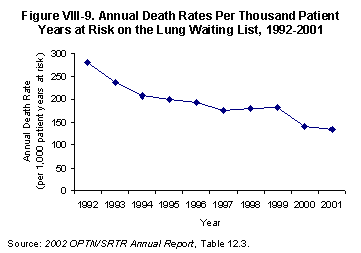
Although observed quantiles of time to transplant showed a tendency to increase between 1992 and 1999, data available as of December 31, 2001 suggest a partial reversal of this trend, perhaps related to the stabilization of new lung waiting list registrations seen since 1997 [Table 12.2]. As shown in Figure VIII-8, 25% of recipients in 1999 were transplanted within 476 days of listing, whereas in 2001 this same percentage of recipients was transplanted within 290 days of listing. This represents a 39% reduction in this quartile of time to transplant [Table 12.2]. However, this same 25th percentile of time to transplant in 2001 was still 22% higher than seen in 1992 [Table 12.2]. Counterbalancing trends toward longer times to transplant through 1999 were decreasing annual death rates on the waiting list (Figure VIII-9). These decreased from 280 deaths per 1,000 patient years at risk in 1992 to a 10-year low of 134 in 2001 [Table 12.3]. These decreases result, in part, from improving concomitant care for end-stage lung patients over time but are also influenced by the wider range of prognoses for currently listed patients as opposed to 1992.
For patients listed in 2000, more favorable times to transplant were observed in candidates greater than 50 years old, with 25% of recipients aged 50 to 64 years transplanted within 290 days and 25% of recipients over age 65 being transplanted within 67 days [Table 12.2] in 2000. In contrast, 25% of patients aged 11-17 years, 18 -34 years, and 35-49 years were being transplanted, respectively, within 575 days, 601 days, and 509 days. Greater organ acceptance may be contributing to the shorter times to transplant in older waiting list patients. Ten-year lows of 123, 108, and 131 annual deaths per 1,000 patient years on the lung waiting list were observed in 2001 for patients aged 11-17 years, 35-49 years, and 50-64 years. As of 2001, lung waiting list patients aged 1-5 years were observed to have the highest annual death rate by age group (362 deaths per 1,000 patient years) [Table 12.3].
During the past 10 years, a comparable number of men and women underwent lung transplantation [Table 12.4 Deceased Donor / Table 12.4 Living Donor]. Because at least 10% and as many as 20% more women than me n were on the waiting list over the past decade, the observed quantiles for time to transplant in women showed a tendency to be larger than those for men during the reported period [Table 12.2]. Annual death rates per 1,000 patient years at risk on the waiting list were usually slightly higher for men than for women during this same period, with 146 versus 125 annual deaths per 1,000 patient years, respectively, seen in 2001 [Table 12.3].
During the past few years, white patients experienced lower death rates and times to transplant than patients of other races on the lung waiting list. In 2001, the annual death rates per 1,000 patient years were 130, 147, and 214 for white, African American, and Asian patients, respectively [Table 12.3]. In terms of times to transplant, 10% of white, African American, and Asian patients added to the waiting list in 2001 were transplanted within 83 days, 104 days, and 301 days, respectively. It should be noted that only 19 Asian patients were added to the waiting list during 2001 [Table 12.2].
Lung transplantation is now more widely accepted as a viable treatment alternative for end-stage lung disease than was the case 10 years ago, with an associated expansion in the profile of potential transplant candidates. Although recent international guidelines have been developed for determining candidates for lung transplantation, the timing of such decisions are still highly influenced by individual patient considerations. The increased pressure to place patients on the waiting list at earlier stages of lung disease in response to longer average times to organ availability has been commented on recently in the context of cystic fibrosis, pulmonary fibrosis, and sarcoidosis (9-13). These trends toward earlier diagnosed and more broadly defined waiting list patients are not without consequences. In describing five-year survival rates for wait-listed cystic fibrosis patients, Liou et al. (14) recently argued that an increase in the number of patients with long survival rates on the waiting list has a deleterious effect on survival for patients with poorer prognosis competing for the same organs. Increasing numbers of patients with better prognoses joining the waiting list may also result in further increases in the average time to transplant, exacerbating problems associated with the organ shortage. Potential approaches for increasing the average years of life saved per organ via risk-based waiting list prioritizations are growing in popularity (14-19). These may eventually reduce the inclination toward placing candidates on the waiting list at earlier stages of disease. The OPTN/UNOS Thoracic Committee is currently investigating allocation algorithms for this purpose, with the objective of creating priority on the waiting list determined by risk of death on the waiting list and posttransplant survival (20).
A review of data on the characteristics of lung transplant recipients suggests interesting trends. An examination of demographic data suggests a rise in the proportion of recipients older than 50 years of age [Table 12.4 Deceased Donor / Table 12.4 Living Donor]. This trend is most evident in the years sin ce 1998. In addition, the vast majority of recipients were characterized as white (>90% for each of the ten years reported). The gender distribution over the years varied slightly with an approximately equal distribution between male and female recipients.
The majority of recipients did not undergo previous lung or heart transplantation [Table 12.4 Deceased Donor / Table 12.4 Living Donor]. Furthermore, the majority of recipients were not hospitalized at the time of transplantation, and only a minority of patients were on life support when transplanted. Importantly, in comparison with 1992-1994, when more than 60% of lung transplant procedures involved single lung transplants, the years 1995-2001 suggest an increasing use of double lung transplantation (Figure VIII-10). The rationale behind this change is not obvious, as the percentage of transplants for emphysema/chronic obstructive pulmonary disease or alpha-1-antitrypsin deficiency increased over the same period of time, a diagnosis for which single lung transplantation has been felt to be an appropriate procedure (21). Similarly, the percentage of transplants for cystic fibrosis (CF), a widely accepted indication for double lung transplantation (22), remained stable over this time period. These data may suggest an increasing acceptance of double lung transplantation as a preferential procedure for many patients, including those with emphysema (23). The impact of this practice on the availability of double lungs for cystic fibrosis and pulmonary hypertensive patients needs to be monitored.
Death rates in the overall recipient population decreased over the 10 years reported [Table 12.7] (Figure VIII-11). This decrease was most evident for the years after 1992-1993. A similar decrease in annual death rates is noted when patients are divided into racial and ethnic categories [Table 12.7]. It is also evident that the highest death rates are consistently noted for patients over 65 years of age at transplantation. This finding is consistent with other published data (24). Furthermore, it is apparent that African American recipients experienced a higher annual death rate than whites except in the most recent year (Figure VIII-11). Although a marked discrepancy was noted in annual death rates by gender in the early 1990s, with rates for men exceeding those for women, this is less evident in more recent years (Figure VIII-12). Similarly, no consistent difference in death rates was noted when patients were segregated by blood type of recipient [Table 12.7].
Consistently higher death rates were noted among patients transplanted while hospitalized in the ICU and among those on life support at time of transplantation. A consistently higher annual death rate is noted for patients with idiopathic pulmonary fibrosis (IPF) in contrast to patients with emphysema/chronic obstructive pulmonary disease, cystic fibrosis, alpha-1-antitrypsin deficiency, or those with primary pulmonary hypertension (PPH) [Table 12.7] (Figure VIII-13). This supports the findings of other retrospective series (18, 25).
Data on graft survival [Table 12.8 Deceased Donor / Table 12.8 Living Donor]. and patient survival [Table 12.9 Deceased Donor / Table 12.9 Living Donor]. tend to correlate. Graft failure within the first three months after transplantation was similar among most recipient demographic groups. As expected, greater early graft failure occurred among patients hospitalized or requiring life support at the time of transplantation. Similar findings are noted for early patient survival. Graft failure and patient survival appear most compromised in recipients with IPF,PPH, and congenital disease. An interesting observation is evident concerning graft survival (Figure VIII-14) and patient survival (Figure VIII-15) as a function of transplant center volume. Although early outcomes seem similar, graft survival and patient survival seem lower in centers with the lowest transplant volume. This would be consistent with similar recent findings for other surgical procedures (26).
After rising steadily between 1992 and 1998, the total number of registrants awaiting heart-lung transplant decreased by 18% over the past three years, to 209 as of 2001 year-end [Table 13.1] and patient survival. Between 100 and 160 new registrants were listed for heart-lung transplantation in the United States each year, with a trend toward a modest decline toward the lower end of this range over the reporting interval [Table 13.2]. The reason for the apparent decline in new registrations may be accounted for partly by prevalent use of prostanoid-based pulmonary vasodilator strategies for PPH, coupled with increasing acceptance of lung transplantation (without the heart). No other emerging patient management strategies for other diagnoses associated with heart-lung transplant (e.g., Eisenmenger’s syndrome) offer an obvious explanation for the decline in new registrations, although earlier recognition and correction of congenital heart lesions leading to Eisenmenger’s may be responsible.
The age of registrants listed for heart-lung transplant over the past decade increased gradually, with patients aged 35 to 49 years now predominating over those aged 18-34 years [Table 13.1]. The proportion of minority registrants increased over the past decade [Table 13.1]. The percentage of African American registrants listed increased from 4% to 13%, while the Hispanic/Latino population increased since 1994.
The number of reported deaths while waiting on the heart-lung list remained constant at about 40 per year (range 28-57) [Table 13.3]. The waiting list death rate is among the highest for any group of transplant patients, reflecting the scarcity of donor organs and the absence of other therapeutic options for patients with end stage heart-and-lung failure. Despite the declining number of new registrations, the year-end census of candidates waiting for heart-lung transplant remained relatively stable over the past decade [Table 13.1]. After rising steadily from 180 to 254 registrants listed between 1992 and 1998, the number decreased by approximately 25 patients per year for two consecutive years, to 209 as of 2001. Although the decline in the total number of candidates listed for heart-lung transplant coincided with the change in the heart allocation policy enacted in 1999, neither the number of heart-lung transplants performed [Table 13.4] nor the reported deaths while waiting [Table 13.3] increased. Thus, the decline in new registrations, coupled with an apparent increase in patients removed from the waiting list for whom outcome was unknown, account for most of the recent decline in the year-end census of patients awaiting heart-lung transplant.
The 25th percentile for time to transplant appears to have declined, from a high of over 700 days for patients listed in 1997 to just under 400 days for patients listed in 1999 [Table 13.2]. If borne out by future data, this trend suggests that policy changes regarding donor heart allocation quite possibly have had the intended effect of directing more organs to candidates on the heart-lung waiting list. It remains true, however, that only a minority of listed registrants actually receive a heart-lung transplant and that most recipients wait more than two years. Further changes in the allocation of heart/lung are being considered by the OPTN/UNOS Thoracic Committee.
En-bloc heart-lung transplantation is a rarely performed procedure, and it continues to decrease in frequency, with only 27 cases reported in 2001 [Table 13.4]. The reasons why this procedure is disappearing include continued improvement in the outcomes of double lung transplantation for cystic fibrosis, PPH, and congenital heart disease [Table 12.7] and changes in allocation policy, which disenfranchise heart-lung recipients. Since, in most regions of the United States Status 1A heart patients receive priority over potential heart-lung recipients, potential heart-lung recipients often do not receive organs until they develop end-stage right heart failure and are listed as Status 1A, often using subcategory “e” criteria. Over the last decade, the majority of patients were aged 35-49 years [Table 13.4]. Throughout the decade, approximately 40% of heart-lung transplants for which indications were reported were performed for congenital heart disease (primarily Eisenmenger’s Syndrome), and PPH with irreversible heart failure accounted for approximately 20%. Not surprisingly, the number of recipients hospitalized preoperatively rose, perhaps reflecting the consequences of allocation policy.
The annual death rate for patients undergoing heart-lung transplantation remains high compared with other organs, but it has dropped consistently since 1997 [Table 13.7]. Actuarial graft (or patient) survival at the early time points lagged behind that for double lung transplantation, but at five years, survival was equivalent at approximately 45% [Deceased Donor Tables - 12.8, 12.9], [Living Donor Tables - 12.8, 12.9], [other Tables - 13.8, 13.9]. This early difference undoubtedly is related to both the increased acuity of patients undergoing a heart-lung transplant and the increased percentage of patients receiving this procedure for congenital heart disease or PPH. Subgroup analysis is limited by sample size, but, clearly, recipients who were in the ICU at the time of transplant had a substantially higher perioperative (three month) mortality, 39% versus 16%.
In summary, heart-lung transplantation is a procedure having a long-term outcome equivalent to that for double lung transplantation. Organ allocation policy and a narrowing of indications are the factors that will likely continue to make this procedure one that is seldom performed.
On January 20, 1999, a major revision to the OPTN/UNOS heart allocation policy expanded the existing categories of Status 1 and Status 2 to Status 1A, 1B, and 2. Three other policy changes, perhaps less far-reaching but still crucial in terms of effect on patient groups, also occurred during the last 10 years. On May 3, 1993, the heart allocation policy was modified to allow the listing and prioritization of in utero candidates. On January 3, 1995, policy changed so that only time waiting in Status 1 was used for prioritization of patients, instead of total active waiting time. And, as of September 6, 2000, candidates added to the waiting list prior to their 18th birthday would continue to be allocated organs as pediatric patients during their entire waiting period.
Without question, among all these changes, the introduction of Status 1A and 1B had the greatest effect on heart candidates and recipients. Prior to the policy change, Status 1 included patients who 1) required cardiac or pulmonary assistance with a total artificial heart, ventricular assist system, intra-aortic balloon pump, or ventilator; 2) were in the ICU requiring inotropes; or 3) were less than 6 months old. Status 2 included all other actively waiting patients. With a few exceptions, patients who would have been considered Status 1 under the prior allocation system would qualify for either Status 1A or Status 1B under the new system. The advent of three active statuses allowed for further delineation and stratification of medical conditions than previously possible under the two-tiered system. Furthermore, the new system more accurately reflects the current care practice for heart failure patients.
The decline in death rates for patients on the heart waiting list has been substantial. Death rates decreased by almost half between 1992 and 2001, from 317 to 151 deaths per 1,000 patient years [Table 11.3]. The death rate in 2001 was much lower than in 1999, both overall and by medical urgency status. It is possible that some of these trends are the result of policy change. By transplanting Status 1A patients before Status 1B patients (who could presumably endure a long wait), most Status 1A patients could be transplanted with available organs. Fewer patients, therefore, would die on the waiting list. The substratification of Status 1 does not explain the decrease in death rates among Status 2 candidates. This latter finding may reflect improvements in general medical care for patients with heart disease while they are on the waiting list.
Overall, the median time to transplant [Table 1.5] and median waiting time to transplant [Table 1.6] for heart patients, unlike those for many other organs, appear to have decreased during the past 10 years, with a consistent decline since initiation of the current policy. Though the median time to transplant for patients added to the waiting list in 1999 in Status 1A was 144 days — about one month longer than the wait for Status 1 patients added in 1998 — the median time to transplant in 2000 and 2001 was approximately 100 days [Table 11.2]. For patients added in Status 1B, the median time to transplant in 2000 and 2001 was similar to that of Status 1A patients; it was considerably shorter in 1999. Although Status 1A patients are given priority in the allocation system, this advantage appears to be balanced out by their higher waiting list mortality rate, resulting in waiting times for Status 1A patients almost on par with those for Status 1B. The median time to transplant for patients added in Status 2 has always been substantially higher than that for Status 1 patients, but in the current policy era it is even more disparate. The increase is most obvious for patients added in Status 2 during 1998 (501 days in 1997 and 649 days in 1998). Because of the long wait experienced by these patients, most of their time on the waiting list was actually spent during the current policy era. The increasing disparity in median time to transplant for Status 2 compared with Status 1A and 1B may result from the current policy. As more Status 1A and Status 1B patients are transplanted, fewer organs are available for Status 2 patients.
Candidates added to the list before their 18th birthday are considered pediatric patients for allocation purposes throughout their entire waiting period. Thus, candidates who had begun accruing status-specific waiting time based on pediatric definitions of status would continue to do so regardless of their current age. The percentage of candidates who were younger than 18 years when listed, but 18 or older at year-end and still on the waiting list, grew from 3 patients in 1992 to 37 in 2001 (3% and 13%, respectively). Though the percentage between 1999 and 2000 dropped slightly (12% to 11%, respectively), there was a subsequent resurgence in 2001. As a relatively small number of patients are affected by this policy and because its implementation is recent, an accurate assessment of its impact is not yet possible.
The percentage of patients who were more urgent (i.e., Status 1, Status 1A, or Status 1B) at transplant increased fairly rapidly between 1992 and 1998, from 40% to 74% [Table 11.4]. However, this percentage has stayed relatively constant since then, ranging only from 70% to 75%. It appears, therefore, that the policy change had little impact overall on the distribution of Status 1 patients (including 1A and 1B) compared with those who are Status 2. It remains to be seen whether the relative balance between the percentage of patients transplanted in Status 1A compared with Status 1B will continue.
Because of the conventions used to calculate patient survival, it is better to assess the impact of the policy on posttransplant outcomes by looking at graft survival. One-year graft survival rates [Table 1.12] rose slowly and fairly consistently for transplants performed between 1991 and 1998, from 81% to 85%. By 2000, the status-specific one-year survival rates also recovered and actually surpassed those in 1998. One possible explanation is the change in prioritization of candidates in January 1999. This change may have had an impact on graft survival initially, given the preponderance of more urgently ill patients who had been waiting for a considerable time. Those who received a transplant were the sickest of the sick. The second year after the policy change, Status 1A patients were perhaps being transplanted at a more optimal time, yielding better outcomes. Further follow-up will need to accrue before a definitive conclusion can be made about the impact of the policy change on survival.
The lung allocation policy experienced only minor modifications during the past 10 years. Within the group of candidates who are blood group compatible with the donor and are within the size range specified by the transplant program, the ordering of potential recipients is primarily based on time actively waiting. The most substantial change to the algorithm during the last decade was the adjustment to waiting time for lung transplant candidates diagnosed with IPF. As of July 3, 1995, candidates received 90 days of waiting time in addition to their waiting time since listing. The policy modification was implemented as an attempt to transplant IPF patients earlier, thereby reducing the high waiting list mortality compared with other diagnostic categories. The death rates per patient year spent on the waiting list declined dramatically for IPF patients between 1995 and 1996, as did those for other diagnoses. In spite of the decline, a substantial gap still exists between death rates for IPF patients and all other diagnoses, with many diagnoses having a death rate less than half that for IPF. There appears no major alteration in the percentage of IPF patients who received a transplant.
Though diagnosis at transplant fluctuated somewhat over the period, it does appear that IPF patients have been receiving a slightly higher proportion of transplants since the policy modification [Table 12.4 Deceased Donors/ Table 12.4 Living Donors]. Between 1992 and 1994, 11%-12% of the recipients were diagnosed with IPF; in 1996, the first complete calendar year following the policy change, 17% of recipients had IPF. Since then, the percentage has ranged from 14% to 17%. With the exception of emphysema/chronic obstructive pulmonary disease and cystic fibrosis, the percentage of transplants in all of the other major diagnostic categories has decreased during the era of this report. One-year patient survival for lung transplant recipients has been relatively stable at 71%-78% between 1993 and 2000, with the notable exception of 1996, when the one-year survival rate was 71% [Table 1.13].
Important trends over the past decade are documented for heart, lung, and heart-lung waiting lists and for corresponding organ transplant recipients. Wait-listed candidates and thoracic organ recipients include increasing percentages of older age groups. Posttransplant patient survival rates and graft survival rates have gradually improved over the last decade.
The following individuals prepared this article: Frederick L. Grover, MD1, Mark L. Barr, MD2, Leah B. Edwards, PhD3, Fernando J. Martinez, MD4, Richard N. Pierson III, MD5, Bruce R. Rosengard, MD6, Susan Murray, ScD7. 1University of Colorado, 2University of Southern California, 3OPTN/UNOS, 4University of Michigan, 5University of Maryland Medical Center, 6University of Pennsylvania, 7SRTR/University of Michigan.
1. Kauffman MH, McBride MA, Shield CF, Daily OP, Wolf JS, Kirklin JK. Determinants of waiting time for heart transplants in the United States. J Heart Lung Transplant 1999, 18: 414-419.
2. Chen JM, Weinberg AD, Rose EA, et al. Multivariate analysis of factors affecting waiting time to heart transplantation. Ann Thorac Surg 1996, 61: 570-575.
3. Morrow WE, Naftel D, Chinnock R, et al. Outcome of listing for heart transplantation in infants younger than six months: predictors of death and interval to transplantation. The Pediatric Heart Transplantation Study Group. J Heart Lung Transplant 1997, 16(12): 1255-1266.
4. Haywood GA, Rickenbacher PR, Trindade PT, et al. Analysis of deaths in patients awaiting heart transplantation: impact on patient selection criteria. Heart 1996, 75(5): 455-462.
5. Morley D, Brozena SC. Assessing risk by hemodynamic profile in patients awaiting cardiac transplantation. Am J Cardiol 1994, 73(5): 379-383.
6. Lavee J, Kormos RL, Uretsky BF, et al. Prediction of mortality in patients awaiting cardiac transplantation: increased risk of sudden death in ischemic compared to idiopathic dilated cardiomyopathy. Isr J med Sci 1996, 32(5): 282-287.
7. Hosenpud JD, Bennett LE, Keck BM, Boucek MM, Novick RJ. The Registry of the International Society for Heart and Lung Transplantation: Eighteenth Official Report – 2001. J Heart Lung Transplant 2001, 20: 805-815.
8. Boucek MM, Edwards LB, Keck BM, et al. The Registry of the International Society for Heart and Lung Transplantation: Fifth Official Pediatric Report – 2001 to 2002. J Heart Lung Transplant 2002, 21: 827-840.
9. Augarten A, Hannah A, Aviram M, et al. Prediction of mortality and timing of referral for lung transplantation in cystic fibrosis patients. Pediatr. Transplantation 2001, 5: 339-342.
10. Stern M, Reynaud-Gaubert M, Haloun A, Bertocchi M, Grenet D. Lung transplantation in cystic fibrosis. Patient selection criteria. Revue des Maladies Respiratoires 2000, 17: 779-784.
11. Flaherty KR, White ES, Gay SE, Martinez FJ, Lynch JP. Timing of lung transplantation for patients with fibrotic lung diseases. Seminars in Respiratory and Critical Care Medicine 2001, 22: 517-531.
12. Mogulkoc N, Brutsche MH, Bishop PW, Greaves SM, Horrocks AW, Egan JJ. Pulmonary function in idiopathic pulmonary fibrosis and referral for lung transplantation. Am J Respir Crit Care Med 2001, 164: 103-108.
13. Arcasoy SM, Christie JD, Pochettino A, et al. Characteristics and outcomes of patients with sarcoidosis listed for lung transplantation. Chest 2001, 120: 873-880.
14. Liou TG, Adler FR, Cahill BC, et al. Survival effect of lung transplantation among patients with cystic fibrosis. JAMA 2001, 286: 2683-2689.
15. Egan TM, Detterbeck FC, Mill MR, et al. Improved results of lung transplantation for patients with cystic fibrosis. J Thorac Cardiovasc Surg 1995, 109: 224-235.
16. Maurer JR. Patient selection for lung transplantation. JAMA, 2001, 286: 2720-2721.
17. De Meester J, Smits JMA, Persijn GG, Haverich A. Lung transplant waiting list: differential outcome of type of end-stage lung disease, one year after registration. Journal of Heart and Lung Transplantation 1999, 18: 563-571.
18. De Meester J, Smits JMA, Persijn GG, Haverich A. Listing for lung transplantation: life expectancy and transplant effect, stratified by type of end-stage lung disease, the Eurotransplant experience. Journal of Heart & Lung Transplantation 2001, 20: 518-524.
19. King TE, Tooze JA, Schwartz MI, Brown KR, Cherniack RM. Predicting survival in idiopathic pulmonary fibrosis: Scoring system and survival model. Am J Respir Crit Care Med 2001, 164: 1171 – 1181.
20. Organ Procurement and Transplantation Network Thoracic Organ Transplantation Committee, Chaired by Frederick Grover. Report to the OPTN Board of Directors, June 28-29, 2001, San Diego, CA.
21. Weill D, Kehsavjee S. Lung transplantation for emphysema: two lungs or one. J Heart Lung Transplant 2001, 20(7): 739-742.
22. Maurer J. Cystic fibrosis and bronchiectasis: selection, timing, and outcome. Sem Respir Crit Care Med 2001, 22(5): 499-508.
23. Meyer DM, Bennett LE, Novick RJ, Hosenpud JD. Single vs bilateral, sequential lung transplantation for end-stage emphysema: influence of recipient age on survival and secondary end-points. J Heart Lung Transplant 2001, 20: 935-941.
24. Hosenpud JD, Bennett LE, Keck BM, Boucek MM, Novick RJ. The Registry of the International Society for Heart and Lung Transplantation: Eighteenth official report-2001. J Heart Lung Transplant, 2001, 20(8): 805-815.
25. Charman SC, Sharples LD, McNeil KD, Wallwork J. Assessment of survival benefit after lung transplantation by patient diagnosis. J Heart Lung Transplant 2002, 21: 226-232.
26. Birkmeyer JD, Siewers AE, Finlayson EV, et al. Hospital Volume and Surgical Mortality in the United States. N Engl J Med 2002, 346(15): 1128-1137.
Center-Specific Reports | OPO Reports | National Reports | Data Accuracy | Report Timeline
Home | Who We Are | What We Do | About Transplants | Transplant Statistics | Research Resources | Contact Us | Site Map
SRTR Site designed and maintained by Diamond Bullet Design & URREA.